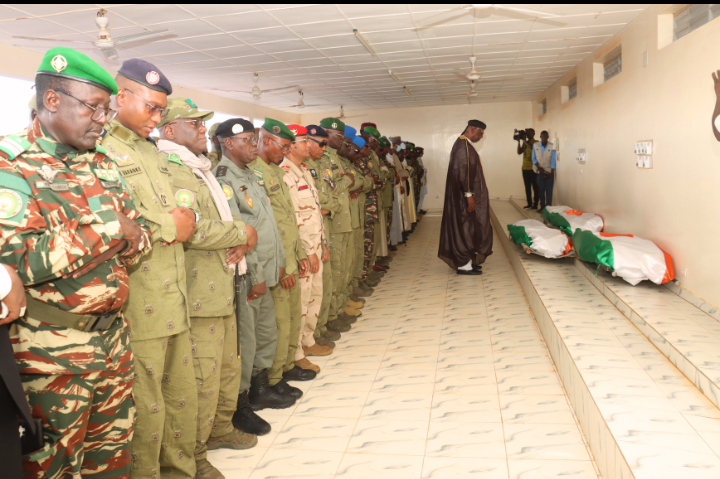
The Agadez Regional Security Council convened a key meeting focused squarely on the security and social situation prevailing in the region, the Agence Nigérienne de Presse reported. This significant gathering, officially titled AGADEZ : Réunion du Conseil Régional de Sécurité axée sur la situation sécuritaire et sociale, brought together key stakeholders and decision-makers in Agadez, Niger, to address the complex and pressing issues impacting the area. Discussions during the intensive session centered comprehensively on strategies designed not only to enhance regional security but also to fundamentally improve social conditions for the residents of Agadez and its surrounding territories. The very act of convening this high-level council meeting shows the ongoing, dedicated efforts by authorities to respond proactively and effectively to the multifaceted challenges confronting the Agadez region. It signals a commitment to a holistic approach that recognizes the intrinsic link between security and the well-being of the populace.
Key Security Concerns Discussed
Deliberations at the Agadez Regional Security Council meeting primarily focused on several critical security challenges that are currently facing the region, demanding immediate and concerted attention. Among the main concerns raised and thoroughly discussed was the persistent issue of insecurity along the extensive and often porous border areas. Council members engaged in detailed discussions regarding the presence and activities of various armed groups operating in these sensitive zones, which continue to pose a significant and direct threat to regional stability and the safety of local populations. These discussions noted the urgent need for reinforced surveillance mechanisms, improved intelligence gathering, and more coordinated efforts among security forces to counter these groups effectively and mitigate their disruptive influence. The strategic importance of Agadez as a crossroads further amplifies the urgency of addressing these border vulnerabilities.
Another key area of discussion that received considerable attention involved the growing and alarming problem of drug trafficking. Participants at the meeting emphasized that Agadez, Niger, due to its geographical position, regrettably serves as a significant transit point for illicit substances, including various narcotics. This role as a trafficking hub not only exacerbates local crime rates but also contributes substantially to broader regional instability, undermining governance and public trust. Authorities reviewed current strategies and explored new approaches to interdict drug shipments more effectively and dismantle the sophisticated trafficking networks that operate across the region. They acknowledged the complex and evolving nature of this criminal enterprise, which often involves transnational elements and requires strong, collaborative responses. The council also considered the profound and corrosive impact of these illegal activities on the social fabric of communities within Agadez, noting how drug-related crime can erode community cohesion and endanger youth.
The proliferation of illegal gold mining was also identified as a significant and troubling topic requiring urgent action. The council acknowledged that these unregulated mining operations, often conducted without proper oversight or environmental considerations, frequently attract and become breeding grounds for various other illicit activities. These include, but are not limited to, banditry, which threatens local communities and travelers, and human trafficking, which exploits vulnerable individuals seeking economic opportunities. The council recognized the severe environmental degradation caused by irresponsible mining practices, leading to land destruction and water contamination. Measures to control and regulate mining activities were extensively explored, with a strong emphasis on ensuring strict compliance with national laws and international standards. A particular focus was placed on protecting the vulnerable populations who are often drawn to these dangerous sites by the promise of work, only to face exploitation and hazardous conditions. These full discussions show the multifaceted and interconnected security environment that the Agadez Regional Security Council aims to address through its coordinated efforts, seeking to establish lasting peace and order, as meticulously reported by the Agence Nigérienne de Presse. The council's agenda, officially framed as AGADEZ : Réunion du Conseil Régional de Sécurité axée sur la situation sécuritaire et sociale, clearly prioritized these critical security dimensions.
Social Situation Under Scrutiny
Beyond the immediate security threats, the Agadez Regional Security Council also dedicated significant attention to the profound socio-economic challenges affecting the region, recognizing them as integral components of the overall stability equation, as reported by the Agence Nigérienne de Presse. Discussions encompassed a broad and intricate range of issues impacting the daily lives and long-term prospects of residents in Agadez, Niger, and its surrounding areas. These thorough deliberations aimed not only to identify the root causes of social instability but also to propose full, sustainable solutions that would foster resilience and improve quality of life. The council's commitment to addressing these social dimensions reflects the holistic approach noted by the meeting's official designation, AGADEZ : Réunion du Conseil Régional de Sécurité axée sur la situation sécuritaire et sociale.
A primary and deeply concerning issue addressed by the council was the persistent problem of youth unemployment. Participants noted that a chronic lack of adequate economic opportunities for young people contributes significantly to social unrest, fueling frustration and despair. This vulnerability can, in turn, make young individuals susceptible to recruitment by illicit groups, including armed factions and criminal organizations, who offer false promises of income or purpose. Strategies to foster strong job creation, particularly in sectors relevant to the region's unique economy such as agriculture, livestock, and artisanal trades, were extensively explored. The council considered various initiatives focused on enhancing vocational training programs, equipping youth with marketable skills, and providing strong support for the establishment and growth of small and medium-sized enterprises (SMEs) to absorb the large and growing young workforce.
Access to essential social services formed another critical part of the agenda, recognized as a fundamental pillar of human development and social equity. The council meticulously reviewed the current state of healthcare facilities and educational infrastructure across the vast Agadez region. Significant deficiencies in these key areas were noted as major factors hindering human development, exacerbating inequalities, and contributing to overall social fragility. Discussions focused intensely on improving the availability, accessibility, and quality of medical care, ensuring that even remote communities have access to basic health services. Similarly, enhancing access to quality education for all age groups, including the often-marginalized nomadic populations, was a key priority, with plans to build more schools and recruit qualified teachers.
The impact of migration on local communities was also a key topic, given Agadez's historical role. Agadez, Niger, is a significant transit point for both internal and international migrants, and the council thoroughly examined the substantial social, economic, and infrastructural pressures this places on local resources and services. Measures to manage migration flows more effectively and humanely were discussed, alongside strategies to provide essential humanitarian assistance to vulnerable migrants while simultaneously minimizing any adverse effects on host communities, such as strain on water resources or housing. The council sought to strike a delicate balance between regional security interests, including border control, and its humanitarian obligations towards those in transit.
The council addressed critical issues related to food security and access to clean water, particularly in light of ongoing climatic challenges that affect the Sahel region. Discussions centered on developing and implementing sustainable agricultural development programs, improving water resource management techniques, and building resilience-building initiatives designed to mitigate the severe effects of drought and chronic food shortages. The overarching objective was to enhance the self-sufficiency of local communities, enabling them to withstand environmental shocks and reduce their reliance on external aid. This included exploring modern irrigation methods and promoting drought-resistant crops.
Finally, the council considered the broader integration of various community groups within the diverse fabric of the region. Promoting social cohesion and fostering inter-communal dialogue was identified as absolutely key for maintaining long-term peace and stability, especially in a region with multiple ethnic and nomadic groups. The deliberations emphasized the critical importance of inclusive governance, ensuring that all segments of society, including women, youth, and minority groups, have a meaningful voice in regional decision-making processes and benefit equitably from development initiatives. These full social considerations were presented as not merely adjuncts but as integral and indispensable elements for achieving lasting security and sustainable development in Agadez, reinforcing the core mandate of the meeting, AGADEZ : Réunion du Conseil Régional de Sécurité axée sur la situation sécuritaire et sociale.
Regional Context and Challenges
The Agadez region of Niger is strategically located at the crossroads of several ancient trans-Saharan routes, making it a critical hub for both legitimate trade and, unfortunately, illicit activities. Its vast, arid landscapes share extensive and often difficult-to-patrol borders with three neighboring countries: Algeria to the north, Libya to the northeast, and Mali to the west. This geographical reality contributes significantly to a complex and dynamic security environment. These extensive and often porous borders present substantial challenges for effective surveillance and control, inadvertently facilitating the movement of various groups—ranging from nomadic pastoralists to armed elements and smugglers—and a wide array of goods, both legal and illegal. The intrinsic geographic realities of Agadez, characterized by its immense size, sparse population density, and difficult desert terrain, play a substantial role in shaping the region's security dynamics, complicating efforts to maintain law and order across such wide and inaccessible areas.
The regional context is further defined by the widespread socio-economic conditions prevalent throughout the broader Sahel region. Agadez faces persistent development challenges that are deeply entrenched, including limited infrastructure development, inadequate access to essential basic services like electricity and communication networks, and a heavy reliance on traditional livelihoods, such as pastoralism and subsistence farming, that are highly vulnerable to increasingly erratic climatic shifts. These compounding factors contribute to a fragile human security situation, where communities often grapple with chronic food insecurity, severe water scarcity, and a profound lack of viable economic opportunities, pushing many into desperation. The demographic makeup of the region, characterized by a complex mix of sedentary agriculturalists and nomadic pastoral populations, adds another intricate layer of complexity to governance, resource management, and social cohesion efforts, requiring nuanced approaches to policy implementation.
The broader geopolitical landscape of the Sahel, which has been marked by persistent instability in neighboring countries and the troubling rise of various non-state armed actors, directly impacts the security and social fabric of Agadez. The region has historically been a significant transit point for complex migration flows, which, while offering some economic benefits through remittances and trade, also brings with it considerable humanitarian concerns and potential security risks, including the exploitation of migrants. The intersection of these deep-seated internal vulnerabilities—such as underdevelopment and resource scarcity—and external pressures—like regional conflicts and transnational crime—creates an exceptionally challenging environment for regional authorities. Addressing these multifaceted issues requires a full and integrated approach that smoothly combines strong security measures with sustainable development initiatives, aiming not only to suppress threats but also to build enduring resilience within communities and foster long-term stability and prosperity. The Agence Nigérienne de Presse has consistently reported on these intricately intertwined factors influencing the region, noting the critical importance of the Agadez Regional Security Council's work, which is officially titled AGADEZ : Réunion du Conseil Régional de Sécurité axée sur la situation sécuritaire et sociale.