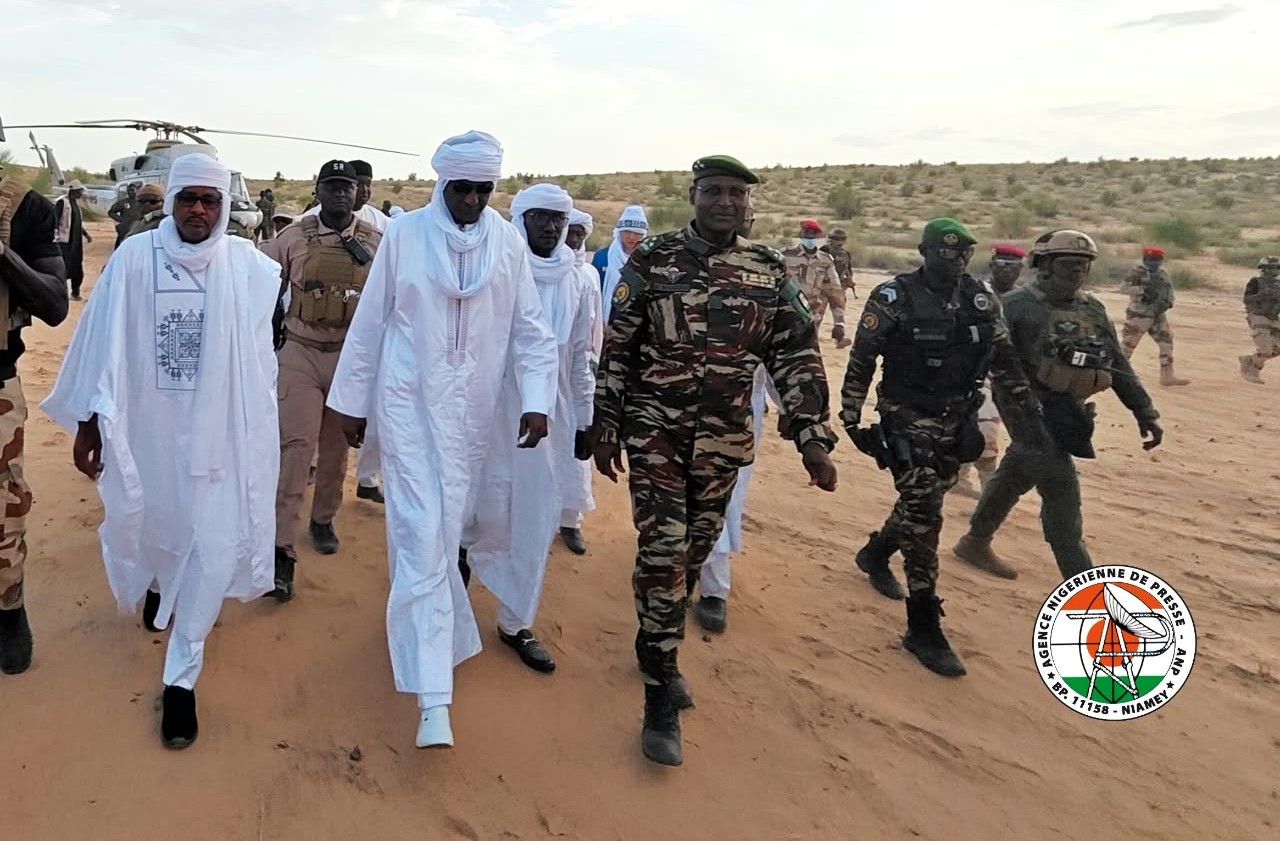
Prime Minister Ali Mahamane Lamine Zeine arrived in Blanakour, Niger, on Saturday, September 5, 2026, to attend the 3rd edition of the Festival of Crafts and Culture of Blanakour (FARCUB). The festival, located in the rural commune of N’Gourti, Diffa region, is scheduled from September 4 to 6, 2026. This annual event draws attention to the rich cultural tapestry of the region. Upon his arrival, Prime Minister Zeine was welcomed by several prominent officials, showing the national importance of the festival. These included the Minister of Crafts and Tourism, Madame Aghaïchata Guichene, who plays a key role in promoting artisanal industries and cultural tourism across the country. The Governor of the Diffa region, General of Division Mahamadou Ibrahim Bagadoma, was also present to receive the Prime Minister, noting the regional government's commitment to the event. Additionally, the Prefect of the N’Gourti department, Captain Issoufou Koraou, greeted the Prime Minister, signifying local administrative support for the festival. The reception demonstrated a unified front from both national and regional authorities in welcoming the Prime Minister to this significant cultural gathering.
Festival's Purpose and Scope
The 3rd edition of the Festival of Crafts and Culture of Blanakour (FARCUB) is centered around the theme: 'Crafts and culture, factors of economic sovereignty and social cohesion'. This theme shows the festival's focus on the dual role of cultural expression and traditional craftsmanship in fostering national independence and societal unity. The choice of this theme reflects a strategic vision to leverage cultural assets for sustainable development and national cohesion. The event is specifically designed to highlight and value the extensive cultural and artisanal heritage of the Toubou community, recognizing its historical significance and contemporary relevance within Niger. This focus aims to bring their unique traditions and artistic expressions to a broader audience, both nationally and internationally.
Organizers intend for the festival to promote local know-how, showcasing the skills and techniques passed down through generations. This promotion extends to various crafts, from intricate textile production to traditional pottery and metalwork, aiming to bring wider recognition to these indigenous practices that form a vital part of the nation's identity. A key objective of FARCUB is to strengthen social cohesion among different communities by celebrating shared cultural elements and traditions. The festival seeks to build bridges through artistic and cultural exchange, fostering a sense of collective identity and mutual understanding across diverse groups within Niger. Additionally, the event aims to stimulate economic development within the region. By providing a vibrant platform for artisans to display and sell their products, FARCUB directly contributes to local livelihoods and supports the growth of small-scale enterprises, offering tangible economic benefits to the community. The emphasis on economic sovereignty through crafts and culture is a central pillar of the festival's mission, aiming to empower local producers and integrate their work into broader economic frameworks, thereby reducing dependence on external markets and fostering self-reliance. This full approach ensures that the festival serves as both a cultural celebration and a catalyst for socio-economic progress.
High-Level Delegation
Prime Minister Ali Mahamane Lamine Zeine's delegation includes a number of high-ranking officials, reflecting the government's strong endorsement of the festival's objectives. Among them is the Minister of Refoundation, Culture and Promotion of Social Values, Mr. Ali Ben Salah Hamouda, whose presence notes the cultural significance of the event and its alignment with national values. Also accompanying the Prime Minister is the Minister of Agriculture and Livestock, Colonel Mahaman Elhadj Ousmane, whose involvement shows the potential for agricultural products and livestock-related crafts to contribute to the local economy. Additionally, several members of the National Council for the Safeguarding of the Homeland (CNSP) are part of the high-level group, indicating the strategic importance attributed to cultural preservation and national unity by the transitional government. Representatives from various institutions of the Republic are also present, ensuring a broad governmental perspective on the festival's outcomes. The President of the National Observatory of Communication (ONC) has joined the delegation for the festival, emphasizing the role of media and communication in promoting national heritage. Their collective presence shows the significance the government places on the Blanakour Crafts and Culture Festival, reflecting a broad ministerial and institutional interest in the event's objectives. The diverse composition of the delegation notes the multi-faceted approach the state is taking to promote cultural heritage and economic development in the region, seeking to integrate various sectors in the pursuit of national progress.
Community Engagement and Significance
The ceremony was marked by a strong mobilization of local populations from Blanakour and surrounding areas. Residents gathered in large numbers to witness the arrival of Prime Minister Ali Mahamane Lamine Zeine and participate in the opening of the Festival of Crafts and Culture of Blanakour (FARCUB). This significant turnout showed the community's deep engagement with the event, which celebrates the cultural and artisanal heritage of the Toubou community, a cornerstone of the region's identity. Local leaders and organizers have consistently emphasized the festival's key role in strengthening social cohesion and promoting economic development within the N’Gourti department. The enthusiastic presence of numerous community members further noted the direct impact and relevance of the festival to the daily lives of the region's inhabitants, providing them with a sense of pride and ownership. Their active participation is seen as key for achieving the festival's overarching objectives of fostering national independence and societal unity through traditional craftsmanship and cultural expression, demonstrating a collective commitment to preserving and promoting their rich heritage.